Quick Answer
The aquarium nitrogen cycle is the biological process by which Nitrosomonas bacteria oxidize toxic ammonia (NH3) to nitrite (NO2-), which Nitrospira bacteria then convert to relatively safe nitrate (NO3-). A new tank completes its initial nitrogen cycle in 4-8 weeks, during which ammonia and nitrite must remain below 0.25 ppm to avoid fish toxicity. Seeding the filter with established media or commercial bacterial cultures like Tetra SafeStart reduces cycling time to 7-14 days. A fully cycled tank reads 0 ppm ammonia, 0 ppm nitrite, and measurable nitrate, indicating the biological filter is established and safe for fish.
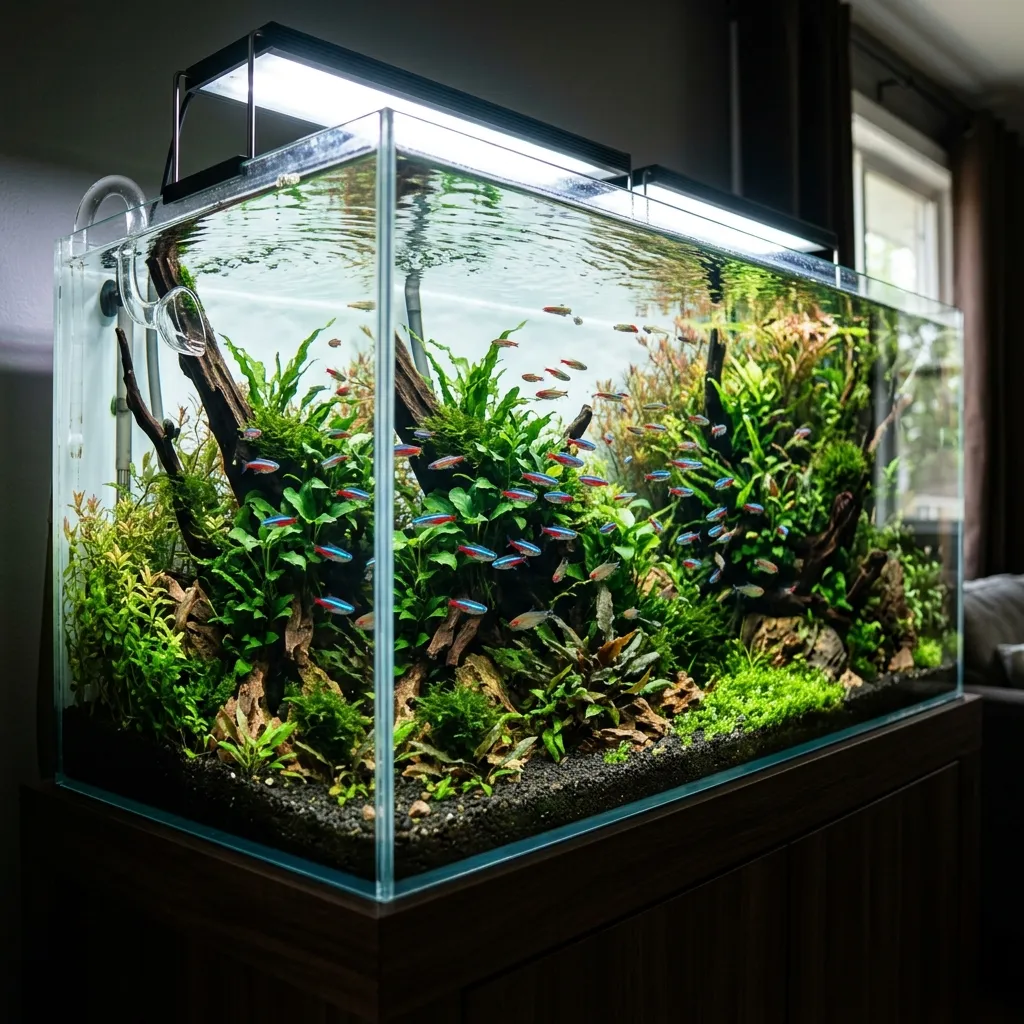
You've set up your first tank. The water is crystal clear, the substrate is perfectly sloped, and you've picked out a beautiful school of neon tetras at the store. You add them to the tank, and they look great for two days. On day three, they're gasping at the surface. Day four, one dies. You test the water and discover ammonia levels off the charts. Your fish are swimming in their own toxic waste. This is the most common beginner mistake in the hobby, and it happens because the tank wasn't cycled.
The nitrogen cycle is not a theoretical concept—it's the biological engine that keeps your fish alive. Understanding it is the single most important step in becoming a successful aquarist. Without it, you're essentially keeping fish in a sealed box of their own waste.
The Chemistry: Ammonia, Nitrite, and Nitrate
The nitrogen cycle is a biological process driven by two groups of nitrifying bacteria. It starts with ammonia (NH3), which is produced by fish waste, uneaten food, and decaying plant matter. Even at 0.5 ppm, ammonia burns fish gills, damages internal organs, and causes respiratory distress. This is where the first group of bacteria comes in. Nitrosomonas species oxidize ammonia into nitrite (NO2-). Nitrite is also highly toxic—it binds to hemoglobin in fish blood, preventing oxygen transport, effectively suffocating them from the inside out. That's why fish gasp at the surface during a cycle: their blood can't carry enough oxygen. A second group of bacteria, Nitrospira, then oxidizes nitrite into nitrate (NO3-). Nitrate is far less toxic and only causes issues at high concentrations—above 40-60 ppm for most fish. Nitrate is removed through weekly water changes or consumed by live plants.
The key takeaway: a cycled tank has 0 ppm ammonia, 0 ppm nitrite, and measurable nitrate. If any of the first two are present, your tank is not cycled and your fish are at risk.
The Cycling Process: How to Cycle Your Tank
Fishless Cycling (Recommended)
Fishless cycling is the safest and most humane method. You're growing bacteria, not fish. Here's the protocol I've used for over 50 tanks: dose pure ammonia (like Dr. Tim's Ammonium Chloride) to 2-4 ppm. Test daily with a liquid test kit—not strips, which are inaccurate. Over the first 4-7 days, you'll see ammonia drop and nitrite begin to rise. That's Nitrosomonas doing its job. Over the next 2-3 weeks, nitrite will peak, then slowly drop as Nitrospira colonizes. When you can dose 2 ppm ammonia and see it drop to 0 within 24 hours, with 0 nitrite and measurable nitrate, your tank is cycled. Total time: typically 4-6 weeks. To speed it up, use a bacterial starter like Tetra SafeStart or FritzZyme TurboStart—these contain live Nitrosomonas and Nitrospira strains that can cut cycle time to 7-14 days. One caveat: these products are live bacteria, so check the expiration date and store them properly. A dead bottle is useless.
Fish-In Cycling (Not Recommended, But Possible)
Fish-in cycling is stressful and risky, but sometimes you inherit a tank or have no choice. If you must do it, follow this strict protocol: stock very lightly (one small fish per 10 gallons, maximum). Use a water conditioner like Seachem Prime that detoxifies ammonia and nitrite for 24-48 hours. Dose Prime daily. Perform 30-40% water changes every 48 hours, or daily if ammonia exceeds 0.5 ppm. Test twice daily. The cycle will take 6-8 weeks and requires intense effort. I've done it twice, and I wouldn't recommend it to anyone. You're essentially gambling with your fish's health.
Advanced Cycling: Seeding and Media Transfer
Seeding is the fastest way to cycle a tank. Take established filter media (sponges, ceramic rings, bio-balls) from a cycled tank and place it in your new filter. This transfers mature bacterial colonies directly. The new tank will cycle in 1-2 weeks because you're skipping the colonization phase. You can also use substrate from an established tank or squeeze the gunk from a mature sponge filter into the new water. That "mulm" is packed with bacteria. Always ask at your local fish store—many will give you a piece of seeded filter sponge for free if you explain you're cycling.
Signs of a Complete Cycle
Your cycle is complete when ammonia and nitrite both read 0 ppm consistently for 5-7 days, and you can detect nitrates (usually 5-20 ppm). A tank that's fully cycled has a distinct, earthy smell—not foul or fishy—and the water is clear, not cloudy. Cloudy water during cycling is often a bacterial bloom, which is normal and usually clears within 48 hours. If you're using a bacterial starter, you might see ammonia drop sharply within 48 hours, nitrite peak by day 5-7, and full cycling by day 10-14. If you're not seeing any movement after 10 days, check your temperature (bacteria prefer 78-82°F), pH (they slow down below 6.5), and your ammonia source. Some household ammonia contains surfactants or fragrances that inhibit bacteria. Use pure ammonium chloride from an aquarium supplier.
Cycle Crashes and How to Fix Them
A cycle crash is when your biological filtration suddenly stops processing waste, causing ammonia and nitrite to reappear in a previously cycled tank. Common causes: cleaning your filter media with tap water (chlorine kills bacteria—always rinse in old tank water), overdosing medications that wipe out bacteria (antibiotics like erythromycin are especially harmful), a sudden pH drop below 6.0, or a massive die-off of bacteria from lack of ammonia (if you removed all fish and stopped feeding). If your cycle crashes, here's the fix: stop feeding for 48 hours to reduce waste. Add a bacterial starter like FritzZyme to reseed the filter. Perform 30% water changes every 48 hours to keep ammonia below 0.5 ppm. If pH is below 6.5, add crushed coral to the filter to buffer it back up. And test daily until parameters stabilize—crash recovery takes 2-4 weeks, depending on the severity.
Knowledge Journey
Recommended Next Steps
Move from reading to action with related calculators, fish profiles, and quiz-based recommendations.
Calculator
Aquarium Nitrogen Cycle Tracker
Stop guessing if your tank is safe for fish. Input your latest ammonia, nitrite, and nitrate test results to determine exactly which phase of the nitrogen cycle your aquarium is in, what your readings mean, and what action to take right now to move forward safely.
Calculator
Aquarium Light Duration & Photoperiod Calculator
Dial in the perfect photoperiod for your aquarium. Enter your tank type, plant density, and viewing schedule to calculate the optimal daily light duration that fuels plant growth, suppresses nuisance algae, and gives your fish a healthy day/night cycle — without guesswork.
Calculator
Annual Fish Keeping Cost Calculator
Estimate the true annual cost of your aquarium by entering tank volume, heater wattage, filter and light power, heater runtime, and local electricity rate. Get a practical itemized breakdown for heating, filtration, lighting, water, and routine consumables before you set up, upgrade, or troubleshoot a tank.
Quiz
Fish Compatibility Quiz
Find beginner-friendly fish that match your tank size, setup, and experience level.
Quiz
Fish Quiz Hub
Choose a guided quiz and get personalized fish care next steps.
Calculator
Ammonia Toxicity Calculator (Free NH3)
Enter your test kit reading (TAN), pH, and temperature — get an instant SAFE or LETHAL verdict for Free Ammonia (NH3). Built for API Master Kit users, cichlid tanks, reef setups, and fish breeders.