Quick Answer
Velvet (Gold Dust Disease) is an extreme severity parasitic infestation caused by the dinoflagellate *Oodinium* (or *Piscinoodinium*). It is significantly more lethal and faster-moving than Ich. It presents as a fine, rust-colored or gold powder dusting the fish's skin, often only visible under direct flashlight. Because the parasite uses photosynthesis to survive, the immediate first step is to plunge the aquarium into a complete blackout (turn off all lights and wrap the tank in blankets). While in blackout, dose the water column with a Copper-based medication (Cupramine) or Malachite Green for a minimum of 14 days to eradicate the free-swimming stage.
The Problem
Fish begin breathing heavily, clamping their fins, and flashing against rocks, but the owner doesn't see the distinct white spots of Ich. They misdiagnose it as a water quality issue, wasting crucial days while a microscopic gold-dust parasite destroys the gills and wipes out the tank.
When to Use This Tool
Consult this guide if your fish exhibit severe respiratory distress, lethargy, and flashing, particularly if a flashlight reveals a fine, velvety, rust or gold-colored film on the body when viewed from an angle.
Who is this for?
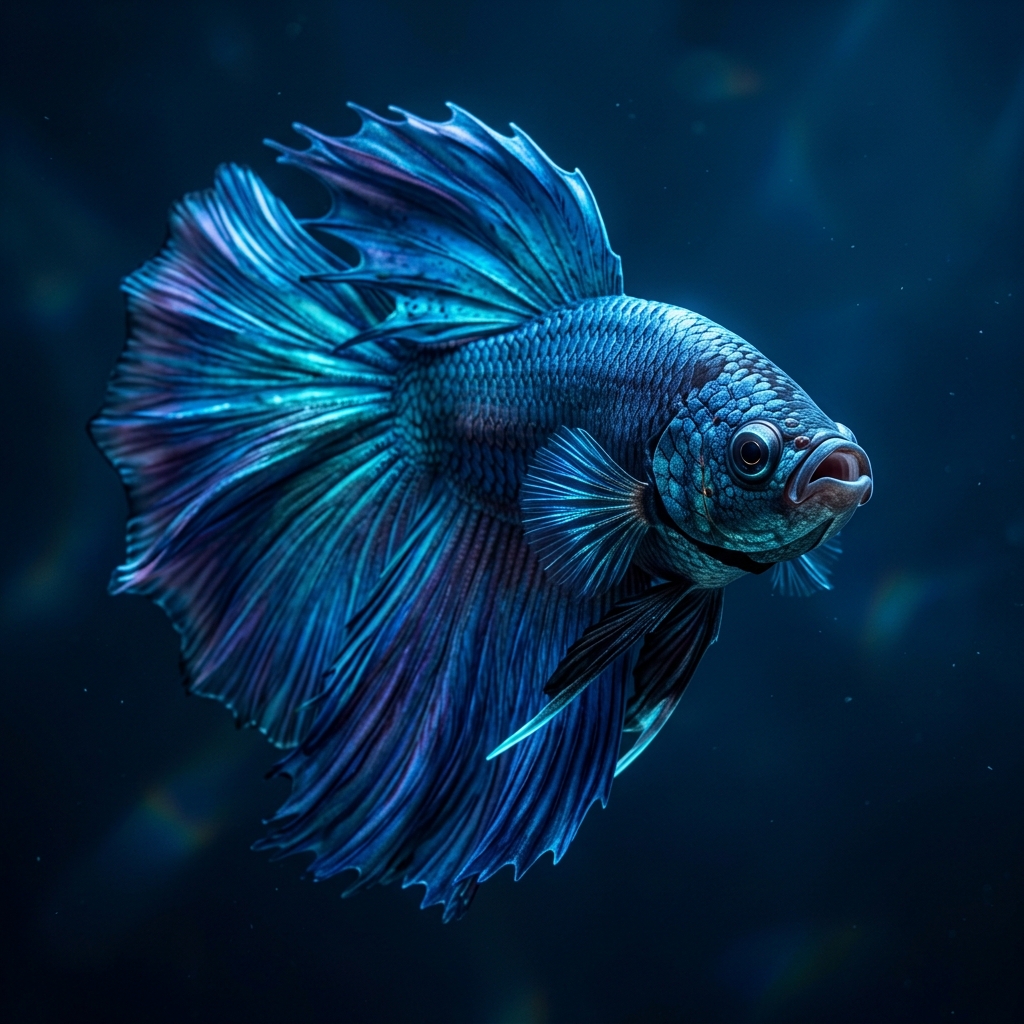
- Betta fish owners (Bettas are notoriously susceptible to Velvet)
- Aquarists dealing with aggressive, invisible gill pathogens
- Hobbyists needing specific Copper dosing protocols for parasitic outbreaks
Knowledge Journey
Recommended Next Steps
Move from reading to action with related calculators, fish profiles, and quiz-based recommendations.
Calculator
Fish Growth Rate Estimator
Most fish are sold as tiny 1-inch juveniles that look harmless in the store — but some will reach 12, 18, or even 24 inches within a year. Enter your fish's species category and current size to visualize exactly how fast it will grow, when it will outgrow your tank, and what size aquarium it will actually need as an adult.
Calculator
Aquarium Light Duration & Photoperiod Calculator
Dial in the perfect photoperiod for your aquarium. Enter your tank type, plant density, and viewing schedule to calculate the optimal daily light duration that fuels plant growth, suppresses nuisance algae, and gives your fish a healthy day/night cycle — without guesswork.
Calculator
Aquarium Salt Dosing Calculator
Calculate safer aquarium salt doses for freshwater fish treatment, stress support, nitrite emergencies, quarantine tanks, and short-term parasite management. Avoid overdosing or harming salt-sensitive species.
Quiz
Fish Compatibility Quiz
Find beginner-friendly fish that match your tank size, setup, and experience level.
Quiz
Fish Quiz Hub
Choose a guided quiz and get personalized fish care next steps.
Calculator
Ammonia Toxicity Calculator (Free NH3)
Enter your test kit reading (TAN), pH, and temperature — get an instant SAFE or LETHAL verdict for Free Ammonia (NH3). Built for API Master Kit users, cichlid tanks, reef setups, and fish breeders.
Treatment Options Compared
| Method | Effectiveness | Plant/Invert Safe | Time to Resolve | Notes |
|---|---|---|---|---|
| Copper Sulfate (Cupramine) | Very High | No (Lethal) | 14 days | The gold standard for Velvet. Must test daily to maintain 0.5 ppm concentration. |
| Malachite Green (Ich-X) | High | Yes | 14-21 days | Excellent alternative for planted tanks. Requires daily dosing and water changes. |
| Acriflavine | Moderate | No | 14 days | Effective antiprotozoal but will severely stain aquarium silicone yellow/green. |
| Total Blackout | Low (Standalone) | No (Kills plants) | N/A | Mandatory supplementary therapy to weaken the parasite, but will not cure an outbreak alone. |
Troubleshooting Guide
1 Fish are gasping at the surface and lethargic, but I don't see any gold dust on them.
Velvet always attacks the oxygen-rich gills first. The parasite load can be lethal before it ever spreads to the visible flanks of the fish. Turn off the room lights and shine a harsh LED flashlight obliquely down the side of the fish; if you see a faint rusty or yellowish sheen, begin treatment immediately.
2 I am treating with Cupramine, but the copper tests show 0 ppm.
If your tank contains calcium carbonate substrate (crushed coral, aragonite, limestone), the calcium is rapidly precipitating and absorbing the copper out of the water column, rendering the medication useless. Move the fish to a bare-glass hospital tank to maintain therapeutic copper levels (0.5 ppm).
3 I raised the temperature to treat Velvet, but the fish started dying faster.
Unlike Ich, where heat is a primary treatment, raising the temperature for Velvet accelerates the parasite's reproduction while drastically lowering dissolved oxygen in a tank where the fish's gills are already failing. Keep the temperature stable at 25°C (77°F) and focus on chemical medication and blackout.
Glossary of Terms
- Oodinium / Piscinoodinium
- The genus of parasitic dinoflagellates responsible for freshwater Velvet disease. Uniquely among fish parasites, they possess chloroplasts and can utilize photosynthesis to survive longer without a host.
- Dinospore
- The microscopic, free-swimming infectious stage of the Velvet parasite. This is the only stage vulnerable to chemical medications and UV sterilization.
- Tomont
- The reproductive stage. The parasite drops into the substrate and encysts, dividing internally to produce up to 256 new dinospores.
- Blackout Treatment
- The practice of wrapping an aquarium in opaque material (like blankets or trash bags) and turning off all lights to starve the chlorophyll-dependent Oodinium parasites of energy.
Scientific References
- Dinoflagellate Infections in Teleost Fish
- Copper Toxicity and Pharmacokinetics in Aquaculture
- Oodinium pillularis: Lifecycle and Control